
Learning to read the barometer
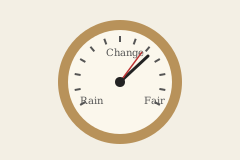
The barometer in my hallway came with the house. It is a round brass aneroid on a wooden mount, with the words Rain, Change and Fair printed in an elegant script around the dial. For years I treated it as decoration. This winter I decided to actually learn to read it.
The basic idea is simple. The dial shows air pressure. High pressure generally means settled, dry weather; low pressure means unsettled weather, wind and rain. But the words on the dial are only a rough guide. What matters far more is the direction and speed of change.
So every morning and evening since early December I have tapped the glass gently, noted where the needle settled, moved the little brass reference needle to match, and written the reading in my notebook along with what the sky was doing. Then, and only then, I made a guess about the next day before looking at the forecast.
What I have learned so far:
- A steady, slow fall over a day or more usually meant rain arriving within twelve to twenty-four hours. This was right most of the time.
- A rapid fall, more than a few millibars in three hours, meant wind. The big storm in mid-January dropped the needle further than I had ever seen it, and the gusts brought down a branch from the neighbour's oak.
- A rise after rain meant clearing, often with a cold, bright morning to follow.
- High and steady meant fog more often than sunshine here in winter, which the dial does not mention at all.
The barometer does not tell you the weather. It tells you which way the weather is leaning.
My success rate, counted honestly, is about seventy percent for "wetter or drier tomorrow". The professional forecast is, of course, much better than that. But I am now in the habit of glancing at the sky and the needle and making a guess, and I notice the weather more because of it.
The other unexpected benefit is the notebook. Two months of twice-daily readings make a surprisingly vivid record. I can flip back and see the long high-pressure spell before Christmas, the run of lows in January, and the exact morning when the first snowdrops opened in the front bed, written in the margin next to a reading of 1021.
I am going to keep it up through the spring. My aim is to get to eighty percent, or at least to be wrong in more interesting ways.